


Protect High-Support-Needs Children
Population-level research should not be used to cap support for profoundly autistic, non-verbal and minimally verbal children with high safety risks. The current one-size-fits-all model is missing the profoundly autistic children most at risk and failing to deliver the early intervention they need. We need a risk-based NDIS triage model now, grounded in evidence about children in like circumstances.

Risk assessment must shape NDIS support decisions
FOR IMMEDIATE RELEASE
Australia Must Stop Treating Its Most Vulnerable Autistic Children Like Statistical Collateral
MEDIA RELEASE For Immediate Release Sunday 17 May 2026
Profound Autism Network: NDIS is using research that ignores our most vulnerable children, and that puts lives at risk
Sydney – The Profound Autism Network is calling on the National Disability Insurance Scheme to stop relying on a major study that does not include children like ours. This flawed approach is being used to cut the amount of therapy given to profoundly autistic children. It is dangerous and must change.
The NDIA is using a 2024 study by Assistant Professor Micheal Sandbank and her team to argue that therapy should be capped at around 15 hours a week. The NDIA says more hours are not reasonable and necessary. But the study does not tell us whether the children it looked at were like our children.
Profoundly autistic children are often non-verbal or minimally verbal. They have Level 3 autism, profound developmental delay, very low adaptive skills and a high risk of serious harm if they do not get enough support. These children make up roughly 25 to 30 per cent of the autistic population. Yet they appear in only about two per cent of autism research samples. The Sandbank study gives no breakdown showing how many children like ours were included. It gives no separate results for non-verbal children, for Level 3 autism or for children with profound impairment.
This is the problem with generalisation. You cannot take results from mostly verbal, lower support children and safely apply them to our children.
Think of heart disease research. For many years, almost all studies were done on men. The research was solid, but when doctors used those same findings on women, their heart attack symptoms were missed or treated wrongly. The science was good, but the generalisation was unsafe. The same risk now exists in autism. Using average results from easier-to-study children to set strict limits for profoundly autistic children is not safe.
Assistant Professor Sandbank herself warned in the paper that practitioners must be especially careful with autistic people who have high support needs and who are at risk of injury if left unsupported. She wrote that there is likely a minimum amount of intervention needed and possibly an optimal amount that depends on the individual child. Unfortunately, current evidence does not offer clear values or ranges for those amounts.
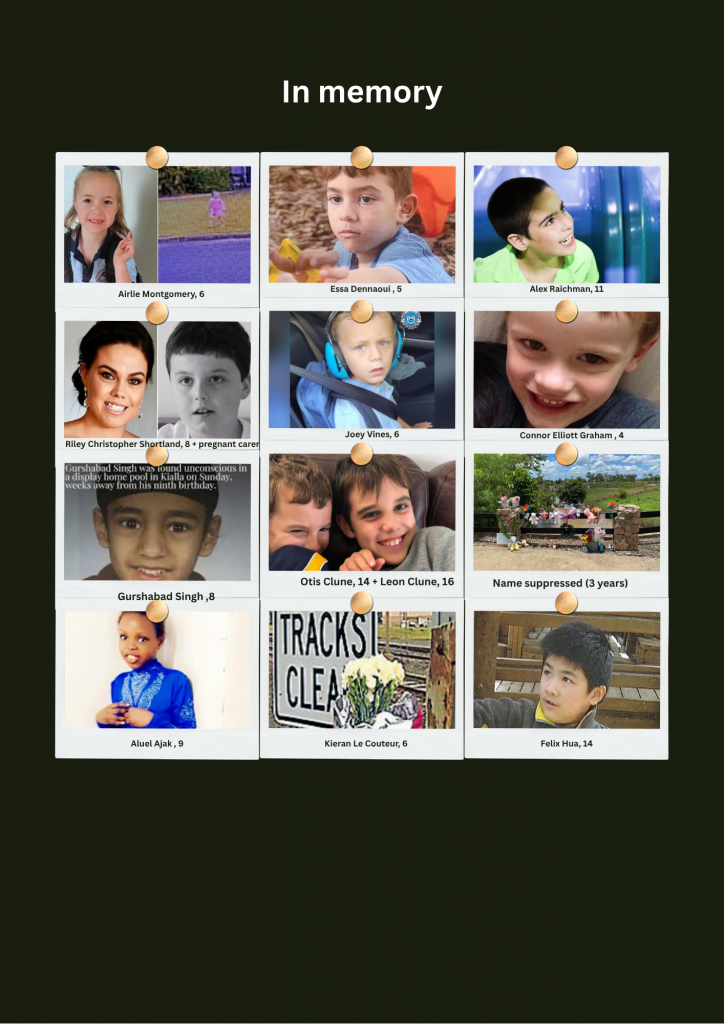
Yet the NDIA is still using the study to impose hard limits. This leaves profoundly autistic children under supported. Real-world consequences are tragic. Australian families have lost children to drowning, traffic accidents and elopement because they did not have enough skilled support. These are not rare events. They happen because the supports that keep our children safe are being capped using research that was never designed for them.
The Profound Autism Network says evidence-based decisions must use evidence that actually fits the child in front of the decision maker. When the research does not include our children, the NDIA must give proper weight to individual clinical evidence, family reports and real progress instead of rigid population averages.
We urge the NDIA, the Administrative Review Tribunal and the Senate to demand better. Generalised research must never be allowed to override the safety needs of the most vulnerable autistic children in Australia.
Media contact: CEO@profoundautismnetwork.org Profound Autism Network Website: profoundautismnetwork.org
ENDS
About the Profound Autism Network
The Profound Autism Network is a carer-led group that speaks up for profoundly autistic Australians and their families. We work for services and policies that recognise the real differences and safety needs of people with high support requirements.
Frequently Asked Questions
Q1. What is the Sandbank study, and why is the NDIA using it? The Sandbank et al (2024) study is a large review of 144 early intervention studies involving over 9000 young autistic children. It found that on average, more therapy hours did not lead to bigger improvements across the whole group. The NDIA uses this to argue that therapy above roughly 15 hours a week is not reasonable and necessary; in practice, they are using it to cap therapy to one hour a week.
Q2. What is the problem with using that study for profoundly autistic children? The study does not show whether children who are nonverbal, Level 3, or have profound impairment were properly included. It gives no separate results for them. When research leaves out the hardest to study children, you cannot safely apply the average findings to them. This is called a problem of generalisation.
Q3. What is the heart disease analogy? For decades, heart research was done mostly on men. The findings were scientifically sound, but when applied to women, the results were unsafe. Women’s different symptoms were missed, and treatment was wrong. The same thing is happening here. Good research on mostly verbal autistic children is being stretched to cover profoundly autistic children whose needs and responses are very different.
Q4. How does this put children at risk of harm? When therapy hours are capped using research that does not fit our children, many profoundly autistic kids do not get the intensity of support they actually need to learn safety skills, communication and regulation. This increases the chance of elopement, drowning, traffic accidents and other preventable tragedies. Australian families have already lost children in exactly these circumstances.
Q5. Does the Sandbank paper itself warn about this? Yes. The authors state that practitioners must be especially careful when deciding therapy amounts for autistic people with high support needs and those at risk of injury if unsupported. They note there is likely a minimum and possibly an optimal amount that depends on the child, but current evidence does not give clear numbers.
Q6. What does the Profound Autism Network want? We want the NDIA and tribunals to stop treating generalised research as automatic proof for every child. Decision makers must check whether the research actually studied children in like circumstances. Where it does not, they must give proper weight to individual clinical evidence, family experience and the child’s real-world progress instead of applying one-size-fits-all caps.
Q7. Is this only about one child? No. The issue affects every profoundly autistic child and family across Australia. A recent tribunal case involving a profoundly autistic child is one example, but the same flawed approach is being used in many NDIS decisions.
Q8. What can families and professionals do? Make submissions to the current Senate inquiry into the NDIS Amendment Bill before 29 May 2026. Share this media release. Talk to your local member. Demand that evidence standards protect the most vulnerable instead of excluding them.
References
Blanc, R., Latinus, M., Guidotti, M., Adrien, J. L., Roux, S., Dansart, P., Barthélémy, C., Rambault, A., Bonnet-Brilhault, F., & Malvy, J. (2021). Early Intervention in Severe Autism: Positive Outcome Using Exchange and Development Therapy. Frontiers in pediatrics, 9, 785762. https://doi.org/10.3389/fped.2021.785762
Bottema-Beutel, K., Zisk, A. H., Zimmerman, J., & Yu, B. (2025). Conceptualizing and describing autistic language: Moving on from ‘verbal’, ‘minimally verbal’ and ‘nonverbal’. Autism, 29(6), 1367-1373. https://doi.org/10.1177/13623613251332573
D’Mello, A. M., Frosch, I. R., Li, C. E., Cardinaux, A. L., & Gabrieli, J. D. E. (2022). Exclusion of females in autism research: Empirical evidence for a “leaky” recruitment-to-research pipeline. Autism Research, 15(10), 1929–1940. https://doi.org/10.1002/aur.2795
Guerrera, S., Fucà, E., Petrolo, E., De Stefano, A., Casula, L., Logrieco, M. G., Valeri, G., & Vicari, S. (2025). Exploring the clinical features of minimally verbal autistic children. Frontiers in psychiatry, 16, 1549092. https://doi.org/10.3389/fpsyt.2025.1549092
Hus Bal, V., Szatmari, P., Georgiades, S., Gentles, S. J., Girault, J., Howlin, P., Lai, M.-C., Carter Leno, V., Lord, C., Madgett, K., Sheinkopf, S. J., Simonoff, E., Williams, Z. J., Zwaigenbaum, L., & Halladay, A. (2025). Methodological challenges and opportunities when studying the course of autism. Autism, 29(10), 2618-2631.
Iacono, T., & Carling-Jenkins, R. (2012). The human rights context for ethical requirements for involving people with intellectual disability in medical research. Journal of Intellectual Disability Research, 56(11), 1122–1132. https://doi.org/10.1111/j.1365-2788.2012.01617.x
Koegel, L. K., Bryan, K. M., Su, P. L., Vaidya, M., & Camarata, S. (2020). Definitions of nonverbal and minimally verbal in research for autism: A systematic review of the literature. Journal of Autism and Developmental Disorders, 50(8), 2957–2972. https://doi.org/10.1007/s10803-020-04402-w
Maksimović, S., Marisavljević, M., Stanojević, N., Ćirović, M., Punišić, S., Adamović, T., Đorđević, J., Krgović, I., & Subotić, M. (2023). Importance of Early Intervention in Reducing Autistic Symptoms and Speech-Language Deficits in Children with Autism Spectrum Disorder. Children (Basel, Switzerland), 10(1), 122. https://doi.org/10.3390/children10010122
McKinney, A., Weisblatt, E. J., Hotson, K. L., Bilal Ahmed, Z., Dias, C., BenShalom, D., Foster, J., Murphy, S., Villar, S. S., & Belmonte, M. K. (2021). Overcoming hurdles to intervention studies with autistic children with profound communication difficulties and their families. 25(6), 1627-1639. https://doi.org/10.1177/1362361321998916
Pizzano, M., Shire, S., Shih, W., Levato, L., Landa, R., Lord, C., Smith, T., & Kasari, C. (2024). Profiles of minimally verbal autistic children: Illuminating the neglected end of the spectrum. Autism research: official journal of the International Society for Autism Research, 17(6), 1218–1229. https://doi.org/10.1002/aur.3151
Russell, G., Mandy, W., Elliott, D., White, R., Pittwood, T., & Ford, T. (2019). Selection bias on intellectual ability in autism research: a cross-sectional review and meta-analysis. Molecular autism, 10, 9. https://doi.org/10.1186/s13229-019-0260-x
Sandbank, M., Bottema-Beutel, K., Crowley, S., Cassidy, M., Dunham, K., Feldman, J. I., Crank, J., Albarran, S. A., Raj, S., Mahbub, P., & Woynaroski, T. G. (2020). Project AIM: Autism intervention meta-analysis for studies of young children. Psychological bulletin, 146(1), 1–29. https://doi.org/10.1037/bul0000215
Sandbank, M., Pustejovsky, J. E., Bottema-Beutel, K., Caldwell, N., Feldman, J. I., Crowley LaPoint, S., & Woynaroski, T. (2024). Determining Associations Between Intervention Amount and Outcomes for Young Autistic Children: A Meta-Analysis. JAMA pediatrics, 178(8), 763–773. https://doi.org/10.1001/jamapediatrics.2024.1832
Sandbank, M., Bottema-Beutel, K., Syu, Y.-C., Caldwell, N., Feldman, J. I., & Woynaroski, T. (2024a). Evidence-b(i)ased practice: Selective and inadequate reporting in early childhood autism intervention research. Autism, 28(8), 1889-1901.
Spencer, T. D., Detrich, R., & Slocum, T. A. (2012). Evidence-based Practice: A Framework for Making Effective Decisions. Education & Treatment of Children, 35(2), 127-151. https://login.libraryproxy.griffith.edu.au/login?url=https://www.proquest.com/scholarly-journals/evidence-based-practice-framework-making/docview/1011330210/se-2
Stedman, A., Taylor, B., Erard, M., Peura, C., and Siegel, M. (2018). Are Children Severely Affected by Autism Spectrum Disorder Underrepresented in Treatment Studies? An Analysis of the Literature. Journal of Autism and Developmental Disorders, 49(4), pp.1378–1390. https://doi.org/10.1007/s10803-018-3844-y
Tager-Flusberg, H., & Kasari, C. (2013). Minimally verbal school-aged children with autism spectrum disorder: the neglected end of the spectrum. Autism research: official journal of the International Society for Autism Research, 6(6), 468–478. https://doi.org/10.1002/aur.1329
Thurm, A., Halladay, A., Mandell, D., Maye, M., Ethridge, S., & Farmer, C. (2022). Making Research Possible: Barriers and Solutions For Those With ASD and ID. Journal of autism and developmental disorders, 52(10), 4646–4650. https://doi.org/10.1007/s10803-021-05320-1
Tobb, K., Kocher, M., & Bullock-Palmer, R. P. (2022). Underrepresentation of women in cardiovascular trials- it is time to shatter this glass ceiling. American heart journal plus: cardiology research and practice, 13, 100109. https://doi.org/10.1016/j.ahjo.2022.100109
Vivanti, G., Lombardo, M. V., Zitter, A., Boyd, B., Dissanayake, C., Dufek, S., … Watson, L. (2025). Proportion and Profile of Autistic Children Not Acquiring Spoken Language Despite Receiving Evidence-Based Early Interventions. Journal of Clinical Child & Adolescent Psychology, 1–18. https://doi.org/10.1080/15374416.2025.25792